

Designers who move to Japan — whether for a studio role, a freelance career, or a hybrid arrangement — tend to hit the same wall within the first few weeks. The contracts arrive, the administrative forms stack up, and somewhere in that pile is a document with a small empty box and a kanji label that translates, roughly, to “seal here.” If you do not have a hanko, that box becomes a problem.
Hanko for designers in Japan is a practical concern that gets surprisingly little coverage in the resources aimed at creative professionals relocating to or working in the country. Most visa guides mention that a seal might be useful. Few explain when exactly you will need it, what kind to get, or how to order one with your foreign name engraved when you do not read Japanese. This guide fills that gap.
Whether you are joining a design agency in Tokyo, contracting independently for Japanese clients, or working remotely while based in Japan, the administrative reality is similar. You will sign contracts, open a bank account, register your address, and deal with institutional paperwork that was built around the assumption that everyone has a personal seal. Understanding the system before you are standing at a counter helps.
Why This Segment Is Asked for a Seal
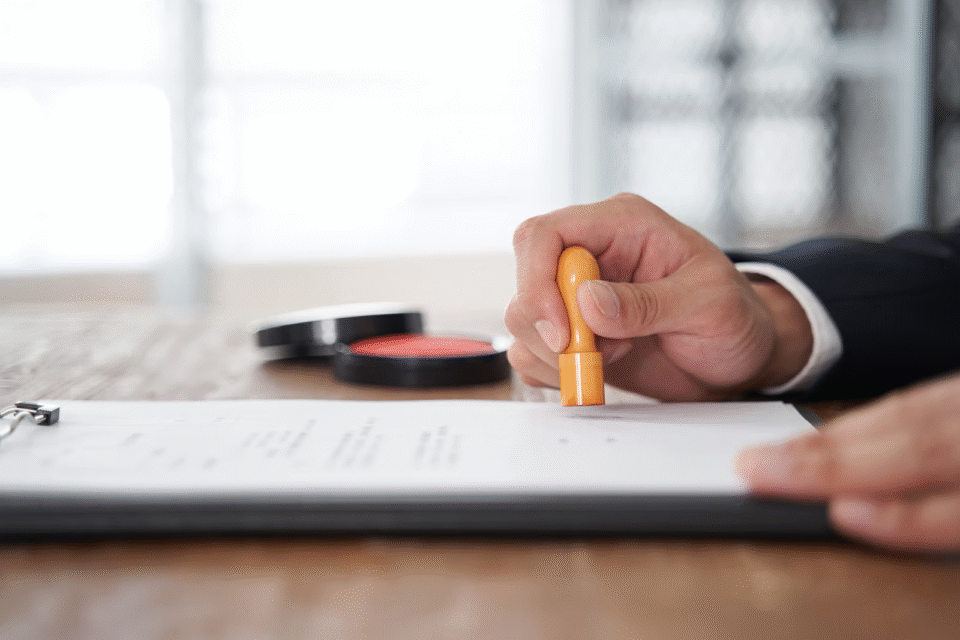
Design work in Japan, particularly in agency environments and client-facing freelance arrangements, tends to generate more formal paperwork than the same work might in other countries. Japanese business culture places significant weight on documented agreements, and the hanko is part of that documentation system. A signature is sometimes accepted, but a seal impression carries a specific weight in Japanese administrative and legal contexts that signatures do not always replicate.
For designers at agencies, the hanko requirement typically surfaces at two points: when you are hired and when you are regularly submitting internal paperwork. Employment contracts at Japanese companies commonly include seal boxes for both employer and employee. HR onboarding forms — direct deposit setup, health insurance enrollment, emergency contact registration — follow the same pattern. Even internal approval processes, like requesting equipment or submitting project-related expenses, often use printed forms with seal fields.
Freelance designers face a slightly different dynamic. Client contracts in Japan, even for creative projects, are frequently drafted in a format that includes a seal field. Some clients, particularly older or more traditional companies, will not consider a contract fully executed without both parties’ seals. Others are more flexible, especially in tech-adjacent industries or with internationally experienced clients. But as a general rule, having a hanko available means you never have to negotiate the format of a contract before the work has even started.
There is also the practical matter of daily life administration. Getting paid in Japan requires a bank account. Opening a bank account commonly requires a hanko. Registering your address at the ward office, which is a legal requirement within 14 days of moving in, may also involve a seal. These are not design-industry-specific requirements — they apply to most foreign residents — but they all land within the same compressed window as your professional paperwork, which makes the first few weeks feel administratively intense.
One micro-scenario worth noting: a graphic designer joins a mid-sized Tokyo agency, signs her employment contract digitally from overseas, and assumes the paperwork is handled. On her first day, HR hands her a stack of internal forms. Several have seal boxes. She spends the afternoon explaining why she does not have one yet, which requires a supervisor to sign off on temporary exception forms. It is resolved, but the friction was avoidable.
Common Documents and Timelines
Designers in Japan encounter seal requirements across both professional and personal administrative contexts. Knowing when they tend to arrive helps you plan.
Before or on arrival:
- Employment contract with a Japanese company or agency
- Freelance service agreement if you are contracting before relocation
First two weeks:
- Residence registration at your ward office — legally required within 14 days
- National health insurance enrollment, often processed at the same counter
- Bank account opening — Japan Post Bank and most major banks commonly ask for a hanko
First month:
- Internal HR forms at your employer: direct deposit, equipment allocation, benefits registration
- Studio or apartment lease if you are renting privately
- Any grant or residency paperwork if applicable
Ongoing:
- Client contracts for freelance projects
- Expense reimbursement forms at agencies (many still use paper)
- Contract renewals, lease extensions, and updated service agreements
A second micro-scenario: a freelance UX designer in Osaka lands a contract with a local retail brand. The client sends a printed contract via post, which is still common in Japan. The seal field is on the final page. The designer does not have a hanko and asks if a signature is acceptable. The client’s legal team says they prefer a seal. The contract sits unsigned for ten days while the designer rushes to order one locally, dealing with a shop that cannot easily engrave a non-Japanese name. A pre-ordered hanko would have closed the deal the same week.
Recommended Hanko Type and Size
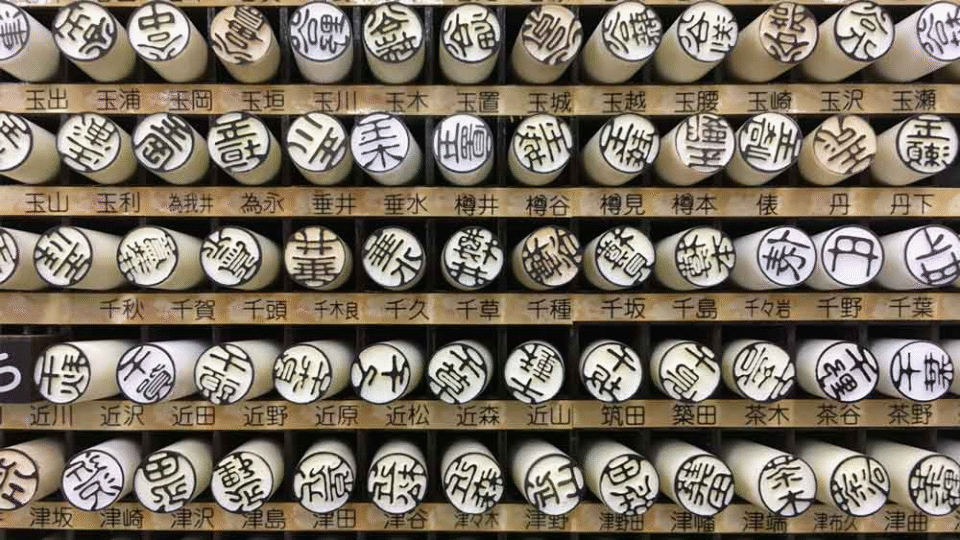
For most foreign designers in Japan, the choice comes down to two types of seal, and for most situations one of them is clearly sufficient.
Mitome-in (認印) is a personal, unofficial seal used for everyday administrative and professional purposes. It covers the overwhelming majority of what designers encounter: client contracts, HR forms, bank account applications at many institutions, expense claims, and general office paperwork. It does not need to be registered with the ward office, and it can be used immediately upon arrival.
Jitsu-in (実印) is a registered seal, formally lodged with your ward office and supported by a seal certificate (印鑑証明書). It is required for high-stakes legal transactions — property purchases, vehicle registration, certain guarantee agreements. As a designer, you are unlikely to need one unless you are buying property in Japan or entering a significant legal agreement in your personal capacity. If that situation arises, you register the seal separately at that time.
Start with a good mitome-in. If you later need a jitsu-in, ordering and registering one is straightforward.
Size: A diameter of 10.5mm to 12mm fits the seal boxes on most standard Japanese forms. This is the practical range for personal use. Avoid going above 15mm — larger seals do not fit standard boxes and signal a corporate or institutional context rather than a personal one.
Material: Acrylic and resin are durable and affordable for regular use. Ebony and other hardwoods last longer under frequent use and feel more substantial. Avoid very soft plastics if you plan to use the seal regularly across multiple client contracts.
Name rendering: For foreign designers, katakana is the most practical choice. It represents your name phonetically and is immediately readable to Japanese administrators and clients. If your name has a Chinese or Korean origin and you prefer kanji, that is also accepted. Romanised name seals exist but are less universally accepted across all administrative contexts.
A checklist before you order:
- Confirm with your employer or client whether a mitome-in covers their requirements
- Choose katakana name rendering unless you have a specific reason for another format
- Select a diameter between 10.5mm and 12mm for standard compatibility
- Pick a durable material for regular contract use
- Order before you land, or in the first few days after arrival
Ordering Tips in English
Ordering a hanko with a foreign name in Japan used to mean finding a local shop, hoping someone spoke enough English to understand your name, and hoping further that the katakana rendering they chose matched what you intended. Walk-in hanko shops are common in Japan, but non-Japanese names require a level of communication that not every counter staff member is prepared for on a busy afternoon.
English-language online ordering has changed this significantly. HankoHub is built specifically for foreigners who need a Japanese seal without navigating the process in Japanese. You choose your name rendering, select material and size, preview the design, and order — with English support at every step. For designers who are already comfortable ordering custom items online, the process is familiar.
Practical tips for getting it right:
Order before you arrive if your timeline allows. Having the seal in hand when you land means your first-week admin runs more smoothly. Production takes a few business days, and if you are ordering internationally, factor in shipping time.
Verify your katakana before submitting. Names that do not have an obvious single romanisation can be rendered multiple ways. “Andrea,” “Thierry,” and “Alexei” each have more than one reasonable katakana equivalent. Choose the version that most accurately reflects how you pronounce your own name, and confirm it before placing the order.
Keep a digital record of your seal design. If your hanko is lost or damaged — which does happen, particularly to small objects used regularly — having the original design on file makes reordering fast. Some designers working in Japan carry a backup seal for this reason.
Common mistakes designers make when ordering:
- Choosing a size above 15mm that does not fit standard form seal boxes
- Selecting a rendering that closely resembles a common Japanese surname, which can create confusion with clients or HR staff
- Leaving the order until a contract deadline is imminent and paying more for rushed production
- Over-investing in a jitsu-in-grade registered seal before confirming it is actually needed for their specific situation
If you are still looking for the right role, ComfysCareer is a solid starting point for foreigner-friendly jobs in Japan.
FAQ
Do I have to have a hanko to work as a designer in Japan? Not always — some employers and clients accept a signature from foreign nationals, and some contracts are handled entirely digitally. In practice, however, many Japanese companies use standardised forms with seal fields, and having a hanko removes a friction point that would otherwise require you to negotiate or explain your situation each time. For most designers working in Japan beyond a short stint, having one is worth it.
Can one hanko cover both professional and personal paperwork? Yes. A single mitome-in is sufficient for most purposes — client contracts, HR forms, bank account applications at many institutions, and general administrative documents. If you are ever required to produce a jitsu-in for a specific legal transaction, you would register a separate seal at that point.
What if my client or employer insists on a jitsu-in? This is uncommon for standard employment or freelance contracts, but it does occasionally happen. If a client specifically requests a registered seal with a certificate, you would order a seal, register it at your local ward office, and obtain a 印鑑証明書. The process takes a few days and a small administrative fee. HankoHub can help you order the right seal for this step.
How long does ordering take? Standard production typically takes a few business days. If you are ordering from outside Japan before your arrival, allow additional time for international shipping. Planning ahead is significantly more comfortable than ordering under deadline pressure.
Are digital seals accepted for design contracts in Japan? Acceptance is growing, particularly in tech companies and for internal document workflows. For client contracts with more traditional Japanese businesses, a physical seal remains the expected format. If your work is primarily with international clients or digitally native Japanese companies, you may find a digital seal sufficient for some situations — but a physical hanko covers the widest range of contexts reliably.
What name should I use on my hanko? Most foreign designers use their family name or a shortened version of their full name. The key is that the name on your hanko is recognisably yours and consistent across documents. If your name is long, a phonetic abbreviation in katakana is a practical solution.
Next Steps

If your move to Japan is confirmed — or you are already here and realising the paperwork is already building — getting your hanko sorted is one of the most practical things you can do before the contracts start arriving. Visit HankoHub to order a personal seal in English, with name rendering options designed for foreign names and support that does not require you to navigate the process in Japanese.